Giro d’Italia 2026 Stage 5
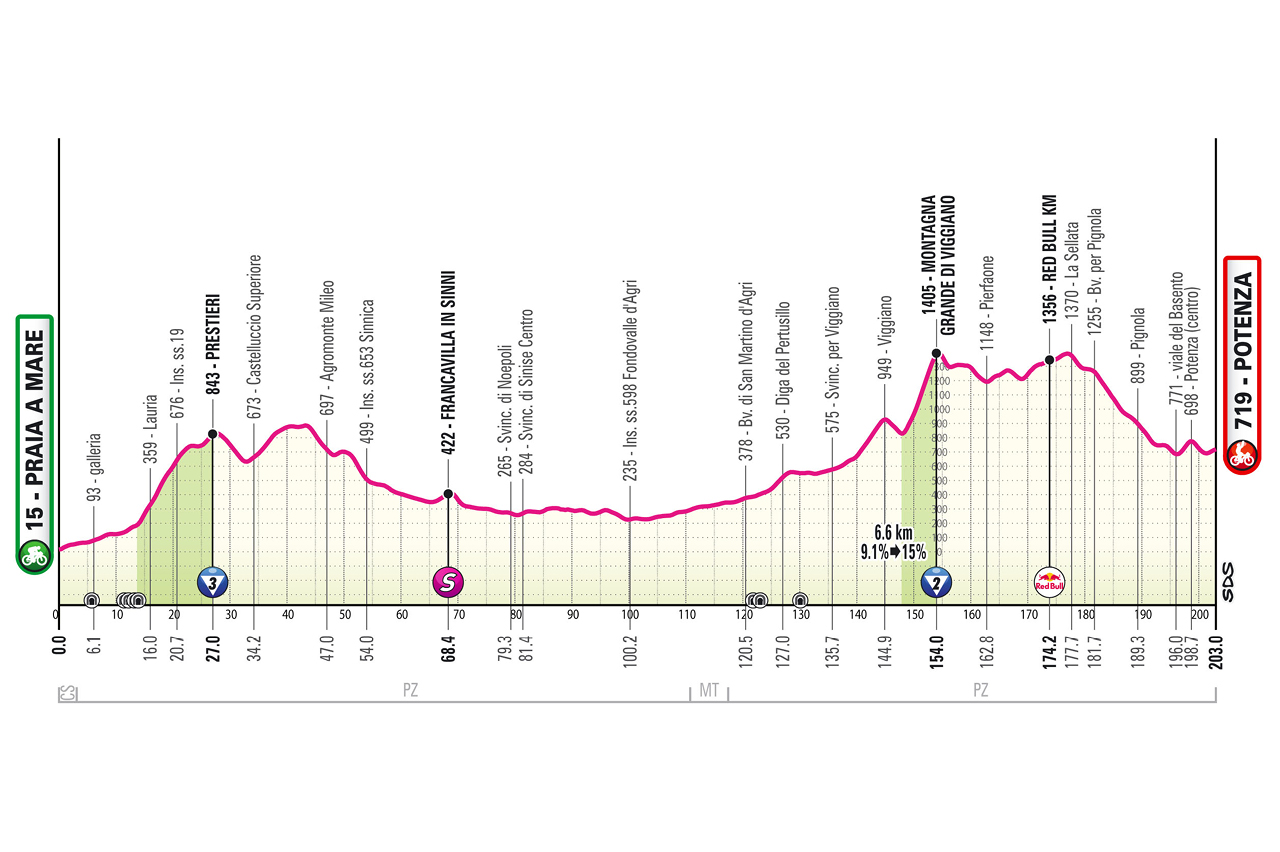
During its 5th stage, on 13 May, Giro d'Italia visits Basilicata region. The stage between Praia a Mare and Potenza will be 203 km long.
I would say it favours a breakaway victory, because the Category 2 ascent is rather close to the finish.
Below you can find the profile of the stage.
If you scroll more, you'll find the usual wider cultural-historical content related to the region the event is about to visit today.
Stage 5
13 May 2026
Praia a Mare - Potenza
203 km
Next stages
GIRO D'ITALIA MEETS EARLY MODERN EUROPEAN HISTORY
Giro d'Italia 2026 continues its route through Basilicata region during the 5th stage. This part of Italy was the ream bome terrain of bandits and brigands for centuries.
In Basilicata, brigands were not simply criminals hiding in the wilderness. They emerged from a society marked by difficult geography, fragile government, feudal inequality, and recurring catastrophe. Between the sixteenth and eighteenth centuries, brigandage became woven into the political and social fabric of the region.
Basilicata’s geography was one of the principal foundations of brigand life. The region consisted largely of steep mountains, deep forests, isolated valleys, and narrow passes running through the southern Apennines. Villages were often remote from one another, connected by poor roads that became nearly impassable during winter rains or snow.
For brigands, this terrain offered perfect protection.
The mountains also made communication slow. News of raids traveled unevenly, and authorities often learned of attacks only after brigands had vanished. In many districts, the state was physically absent outside the walls of towns.
The social structure of Basilicata also contributed directly to brigandage. Much of the land was controlled by feudal barons and ecclesiastical institutions, while peasants possessed little property of their own.
Population growth in some periods intensified competition for farmland, leaving many peasants impoverished or landless. Seasonal hunger was common, especially after bad harvests.
For some men, brigandage became an alternative to starvation.
At times, brigands also presented themselves as enemies of oppressive landlords. Villagers occasionally viewed them with sympathy, especially when hatred of tax collectors or feudal officials ran deep. This did not make brigands social reformers, but it complicated the relationship between criminals and local communities.
The line separating peasant resistance from organized banditry was often blurred.
This led to the romantization of brigands' life, first, mostly during the 17-18th centuries by international travellers and the entlightened members of nobility, who saw them rather as freedom fighters, rebels agains feudal surpression than simple criminals, and this view tickled down to other groups of population during the 19th cenntury.
And of course, 20th century film industry strengthened this view too.