Binda’s dominance in the Giro d’Italia had reached such heights that the race itself was losing its competitive appeal. With Binda in the race, it often felt like the outcome was predetermined, and the excitement of the Giro was fading. Fans wanted to see a more open race with more riders competing for the win, and the organizers of the Giro d'Italia, led by La Gazzetta dello Sport, the newspaper that founded and organized the race, began to worry that Binda’s continued success could hurt the race’s popularity.
The 1929 edition of the Giro was a perfect example of Binda's superiority. He won the race with a margin of over 27 minutes ahead of the second-placed rider, and he had taken eight stage wins along the way. There seemed to be no one who could realistically challenge him, and the organizers feared that another year of Binda dominating the Giro could lead to a decline in interest and excitement for the race.
Faced with the prospect of another inevitable Binda victory, the organizers came up with an unprecedented and extraordinary solution: they decided to pay Alfredo Binda not to compete in the 1930 Giro d'Italia. The reasoning was simple: without Binda in the race, the competition would be more open, unpredictable, and exciting, which would ultimately be better for the race’s popularity and for cycling in general.
The amount of money offered to Binda was 22,500 lire, which was equivalent to the prize money he would have received for winning the race. Essentially, they were paying him his potential winnings upfront just to stay away and let other riders have a chance. It was an extraordinary move, something that had never happened before in the history of the Giro, or indeed in professional cycling.
Binda, who was still at the peak of his powers, accepted the offer. For him, it was a good deal: he was paid the equivalent of a winner’s purse without having to endure the grueling three-week race. However, it was also a sign of just how much he had outclassed his competition.
With Binda sitting out the 1930 edition, the Giro was indeed a more open and unpredictable race. Riders who would have been fighting for second place suddenly found themselves with a genuine chance to win. The 1930 race was ultimately won by Luigi Marchisio, a talented young rider, but one who, in all likelihood, would not have been able to defeat Binda had he been competing.
The absence of Binda certainly added an element of suspense to the race, and it allowed other riders to shine. But the fact that the race organizers had to resort to such drastic measures to ensure competitiveness only highlighted the extraordinary dominance that Binda had over his contemporaries.
Despite sitting out the 1930 Giro, Alfredo Binda returned to the race in 1931 and immediately resumed his winning ways. He claimed his fifth Giro d'Italia victory in 1933, becoming the first rider to achieve that milestone, a record that would not be equaled for decades. He also became the first rider to win the newly introduced King of the Mountains classification in 1933.
Binda’s legacy in the Giro d'Italia is unparalleled. He won the race five times (1925, 1927, 1928, 1929, and 1933), claimed 41 stage wins, and was a dominant force in Italian cycling. His record of five Giro victories was later equaled by Fausto Coppi and Eddy Merckx, but Binda's era of dominance remains one of the most impressive in cycling history.
Read more stories


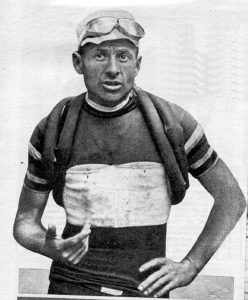 Faced with the prospect of another inevitable Binda victory, the organizers came up with an unprecedented and extraordinary solution: they decided to pay Alfredo Binda not to compete in the 1930 Giro d'Italia. The reasoning was simple: without Binda in the race, the competition would be more open, unpredictable, and exciting, which would ultimately be better for the race’s popularity and for cycling in general.
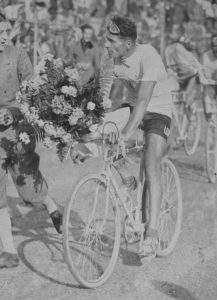 Despite sitting out the 1930 Giro, Alfredo Binda returned to the race in 1931 and immediately resumed his winning ways. He claimed his fifth Giro d'Italia victory in 1933, becoming the first rider to achieve that milestone, a record that would not be equaled for decades. He also became the first rider to win the newly introduced King of the Mountains classification in 1933.